

Call for Quotes Supply, Installation, Repair, Maintenance Contact us today!
Request A Quote





Another long Melbourne winter is just about underway. The nights are getting noticeably cooler and the days are getting shorter. If you’re lucky enough to own a split system, now is the perfect time to switch it over to heating mode.
It might be simple, but did you know there are actually a number of things to consider before switching from one mode to the next? It’s only natural to do your diligence, and we’re here to show you how! Let’s take a good look.
A split system air conditioner truly is an ingenious piece of equipment, and this is why they’re so popular with both home and business owners across the city of Melbourne.
Here’s a quick breakdown of they work. A split system is based around the principle of transferring heat rather than creating it. When it’s in cooling mode, it pulls heat out of your home and pushes it outside. In heating mode, that process flips completely, as it draws heat from outside air and brings it indoors.
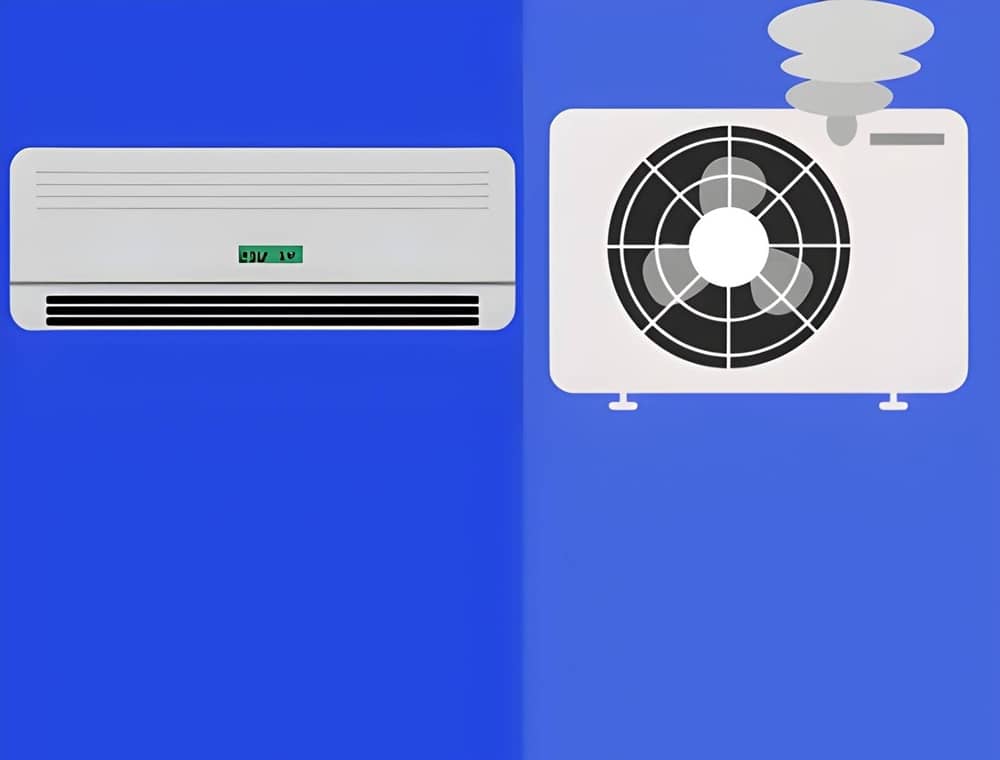
The refrigerant is the part that makes this all possible. It moves through the evaporator coil and compressor cycle, absorbing and releasing heat as it circulates. After you switch modes, internal valves reverse the flow so the same system can heat or cool depending on what you need.
Because everything relies on that cycle, parts like the compressor, fan, and thermostat all need to be working properly for heating mode to run smoothly.
There’s no doubting the fact that split system air conditioners have become more sophisticated. In addition to their higher energy star ratings (some as high as 6 or 7), units can be controlled with an app and connect to Wi-Fi. As a result, they’re far more customisable than they were in the past.
One area that’s changed significantly is the amount of modes. If you’ve purchased a Mitsubishi or Daikin split system in the past few years, you’ll already be familiar with all the different modes and settings they have.
Different modes, of course, have a very different impact on your comfort level. Alongside the more standard modes like Cool, Heat, Dry, and Auto, there are also settings specifically designed to lower noise or energy output. In this sense, there’s real value in learning what each setting means and how it works in real time.
You can either test them out yourself or check out the manual for a detailed breakdown.
It’s freezing cold the moment you get home, wake up or walk around the house. The temptation is to switch on the heat mode, and set the temperature high and take the chill off as soon as possible.
What you need to be aware of here is that setting the temperature too high actually causes more issues than advantages. As noted by the ACEEW, the recommended guidelines are to “keep the internal temperature of your heating set between 18°C and 20°C.” They also note that “every degree you increase your heating can add between 5 to 10% to your energy costs.” (Source: ACEEW ‘Winter Savings’)
What many people don’t know is that when a split system is set to heat mode, anything between 18 to 20 or even 21 degrees is more than enough to keep you warm and cosy.
As we head into another long Melbourne winter, now is the perfect time to stop and consider the last time you arranged a split system service. It’s easy to put this off, but you’d be surprised at just how valuable it can be in the long-term.
A standard service will usually include checking refrigerant levels, cleaning filters, inspecting the compressor, and testing how the system responds when switching modes. It also helps pick up small issues early, before they turn into bigger problems when you’re relying on heating every day.
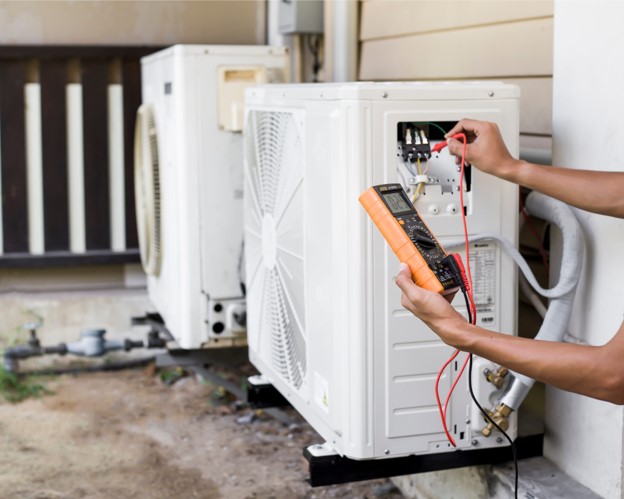
If something feels off when you switch your system into heating mode, it usually gives you a few hints. Here are five of the most common telltale signs.
This is a major issue, especially if your property isn’t well insulated. If your split system isn’t blowing warm air, or it feels like it’s struggling to keep up, low refrigerant levels just might be the issue.
As we covered earlier, the refrigerant is what transfers heat through the system, so when levels drop due to a leak or installation issue, heating performance drops off quickly. A broken compressor, therefore, can also stop the cycle from working properly, leaving you with lukewarm or cold air instead of heat.
For example, if you notice your system takes much longer than usual to warm the room, or never really gets there at all even when it’s running constantly. If so, it’s time to arrange a service!
Clanking, buzzing, or rattling noises can indicate loose parts, a worn fan motor, or something not sitting correctly inside the unit. These sounds are often early warning signs that something is starting to wear out.
Musty smells can point to mould building up inside the system, especially if it has not been used or cleaned in a while. Burning smells are more serious and can suggest dust buildup on internal components or electrical issues. These are not things to ignore, especially once heating mode starts getting regular use again.
If your split system suddenly starts making noises you don’t normally hear, it’s usually one of the first signs something is off. A healthy unit should run with a steady, low background hum, especially if it’s a newer model that’s built around whisper-quiet operation. Once you start hearing clanking, buzzing, rattling, or whistling, it is worth paying attention because those sounds often point to an underlying issue.
Clanking or rattling can suggest loose parts inside the unit or a fan that is starting to wear out. Buzzing noises are often linked to electrical issues or a motor that is struggling to run properly. Whistling can point to restricted airflow, which is commonly caused by dirty or blocked filters, or air struggling to pass through the indoor unit.
Even well-known split systems from Daikin, Mitsubishi, or Hisense can start making unusual sounds if they have not been cleaned or serviced regularly. The key thing is to recognise when something’s a little off, and call in the pros to get it checked out.
While it’s difficult to put down this as the cause of high energy bills, it could be playing more of a role than you think. This is particularly true if it’s the only heating and cooling system in the house.
So, if your energy bills have jumped without much change in how you are using the system, this often means the unit is working a lot harder than it should. Some of the culprits here are locked filters, restricted airflow, or worn components, all of which can make the system run longer cycles just to reach the set temperature.
You might notice it running almost constantly in the background or taking longer to switch off once the room is warm. That usually points to reduced efficiency somewhere in the system.
If you’re calling for repairs more often than usual, that’s usually a sign there is a deeper issue that is not being fully resolved. Over time, components naturally wear out, and small faults can keep coming back if they are not properly addressed.
You might find yourself needing repeat call-outs for the same problem or noticing the system performs differently each time it is serviced. Regular maintenance can help pick up worn parts early and give a clearer idea of whether it is time to repair or replace the unit altogether.
Ready to get your unit checked out? Give Absolute Airflow a call! We offer air conditioning servicing in Coburg, Maribyrnong, Diamond Creek and more.
Getting your split system ready for heating mode does not take much, but it can make a real difference once winter sets in. Regular servicing helps keep airflow steady, reduces strain on components, and lowers the chance of breakdowns when you are relying on heating most.
If something feels off or you want your system checked before winter, the team at Absolute Airflow is more than happy to help. They provide split system servicing, repairs, and maintenance across Melbourne, working with a wide range of systems so your setup is ready for the colder months ahead.
© Copyright 2026 - Absolute Airflow - All Rights Reserved
 Previous Post
